


The History of Buick, America’s Oldest Auto Brand

The holiday season is rapidly approaching, a time to toast the incoming year and celebrate all that came before it. While there’s plenty to celebrate after another wonderful year at Gallagher GMC, we may hold off on popping the top-shelf champagne until next winter. That’s when Buick will be celebrating its 125th anniversary.
Buick was founded in December of 1899 by the Scottish-born American inventor David Dunbar Buick. Thanks to the dissolution of Oldsmobile in 2004, it now stands as the current oldest surviving American carmaker. (Although Henry Ford produced his first car in 1896, he didn’t officially start the Ford Motor Company until 1903). Throughout that time, Buick transformed from an unsuspecting operation, only tangentially interested in automobiles, into one of the most successful, well-respected auto makers in the entire world.
Let’s take a brief trip through the early history of Buick, a company whose reign spans three centuries.
Humble Origins & Fast Growth: 1899-1908
When David Buick founded the “Buick Auto-Vim and Power Company” in Jackson, Michigan in 1899, his original intention was to continue the production of stationary and marine engines. Buick’s first automobile was instead the creation of Walter Marr, Buick’s chief engineer. Unsatisfied with David’s reluctance to embrace automobile production, Marr left Buick in 1901 to start his own company. (Marr would be rehired by Buick in 1904).
His replacement was Eugene Richard, who in 1902 filed a patent for an overhead valve engine. Under Richard’s stewardship, David Buick slowly but surely became a convert, his confidence in the potential of the automobile market growing. While just 37 automobiles were produced during Buick’s first year, that number would rise to 750 by 1905.

Buick was incorporated as the Buick Motor Company in 1903, just as its cars were starting to gain popularity. In 1904, the patent was approved for Eugene Richard’s overhead valve engine, whose revolutionary design is still used to this day. Still, the young company faced its share of financial difficulties.
David Buick sought out William Durant, owner of Durant-Dort Carriage Co., the country’s leading producer in horse-drawn vehicle production. When Buick demand eventually outpaced the amount of cars they were able to manufacture, Durant and chief Buick financier James H. Whiting convinced David to relocate the company to Flint, Michigan.
Demand for the Buick only began to swell after the move to Flint, and 1905’s tally of 750 cars produced ballooned to over 8,800 by 1908, just three years later. Very quickly, Buick production was outpacing big-name rival competitors Oldsmobile and Ford. In 1906, Buick added to its legend by being the only car to complete a thousand-mile relay race from Chicago to New York. Meanwhile that year, William Durant created a modest holding company by the name of General Motors.
Production During Great Depression & World War II: 1926 – 1945
In the decades that followed, Buicks became the preferred driving method of leaders across the globe. Within the Republic of China, Buick was a prestige brand, driven by high-level politicians and even the Emperor. Buick opened its first international sales office in Shanghai in 1929, and to this day, Buick sells 80% of its production in China.
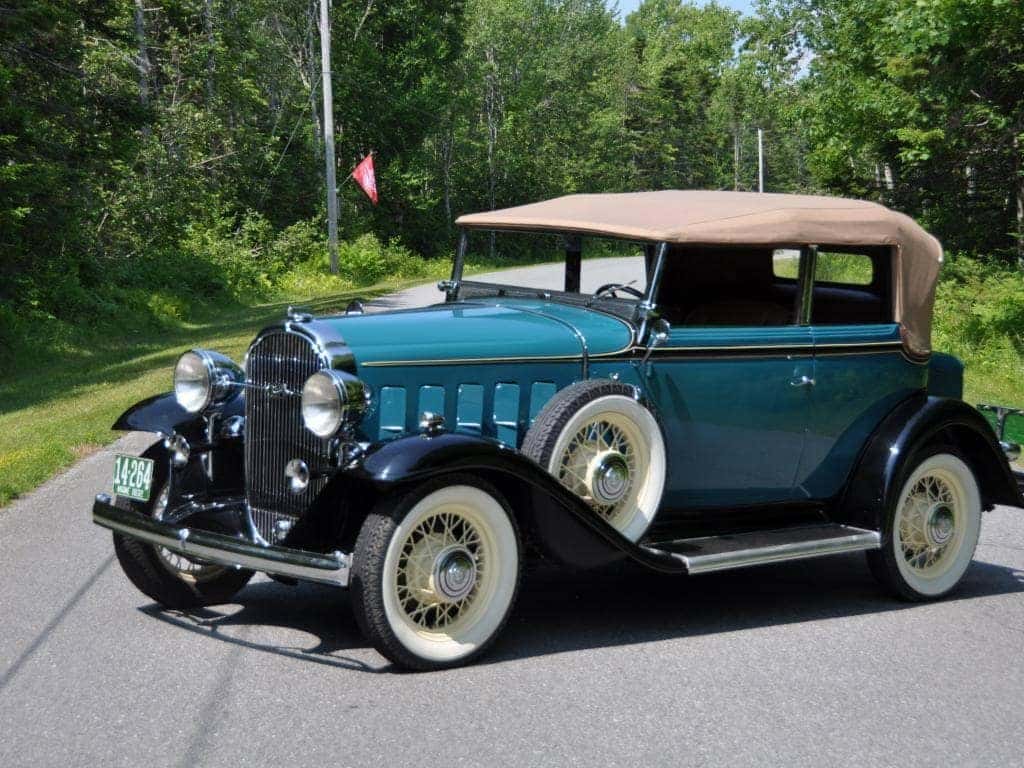
Buick production would fluctuate throughout the turbulent 30’s and 40’s. By the end of 1926, Buick was building a record 260,000 units a year. In 1933, however, in the throes of the Great Depression, only 40,000 total cars were produced. To help combat this, Buick rolled out the Series 40, the most affordable Buick to date at just $865 (about $18,000 today, adjusted for inflation). Its runaway success led to other popular models like the Century and Limited, and by 1936, annual production was already back to the 200,000-unit mark.
Buick would turn its attention towards aircraft engine production during World War II, but innovations to their auto designs persisted. In 1939 Buick became the first company to introduce turn signals to their cars. That same year, Buicks were purchased by Edward VIII and served to transport royalty. And the iconic grille introduced in 1942 replaced the thin vertical bars with notably thicker three-dimensional bars set behind the bumper.
Smooth Sailing: The 1950’s to Today
When another economic recession hit two decades later, in the late 1950’s, Buick was prepared. Once again, they were able to weather a dip in production numbers and continue to release exciting new models. Some of the most iconic Buick models were introduced in this era, including the Skylark and Riviera.
By the 1960s and ‘70s, Buick had transformed itself into a brand known for its style and performance designs. Buick had already been royalty in the domestic auto space – but now, they were beginning to showcase it.
Today, we still associate the name Buick with luxury and sophistication. Buick has only honed its designs in recent years, outfitting each of their vehicles with the latest in modern comfort: leather seating, chrome trim, and the latest technologies. The result of this commitment to refinement? In 2015, Buick sold a company record one million cars.
Buy a Used Buick Vehicle in New Britain, CT Today!
As we approach Buick’s 125th anniversary, there’s never been a better time to get over to Gallagher GMC. Whether your vehicle needs an oil change, battery diagnosis, or help with tires and brakes, our Service Center has you covered. Check out our inventory of pre-owned Buicks to get behind the wheel of one today, and drive into the future with the carmaker who has reliably navigated through our country’s past.


2 comment(s) so far on The History of Buick, America’s Oldest Auto Brand
My name is Ray Durden I love history I’m not near your dealership
I live in Lancaster PA and your story on Buick’s history was great
I drive a 2016 Premium 2 AWD Turbo Regal I bought with 63 thousand
Miles on this is the first car I ever owned that performs really good
I only take it to Buick dealerships for service I don’t know who reads
This I just wanted to say loved the history on my favorite car company
Thank you for taking the time to read the post and we are glad you enjoyed. This was a fun one to put together. While we are not a Buick dealership anymore, we do still offer up great used Buicks – so we want to keep the history post alive!